Michigan SPARC alliance aims to accelerate supercomputing and AI research
- Editorial Team SDG9

- Feb 18
- 3 min read

A new partnership between Los Alamos National Laboratory (LANL) and the University of Michigan (U-M) is being positioned as a major push to speed up research in supercomputing and artificial intelligence. Officially titled Michigan SPARC, the Strategic Partnership for Accelerated Research and Collaboration would create a large high-performance computing facility in Washtenaw County, with separate classified and unclassified research spaces intended to broaden both national-security work and open academic collaboration.
What Michigan SPARC is designed to do
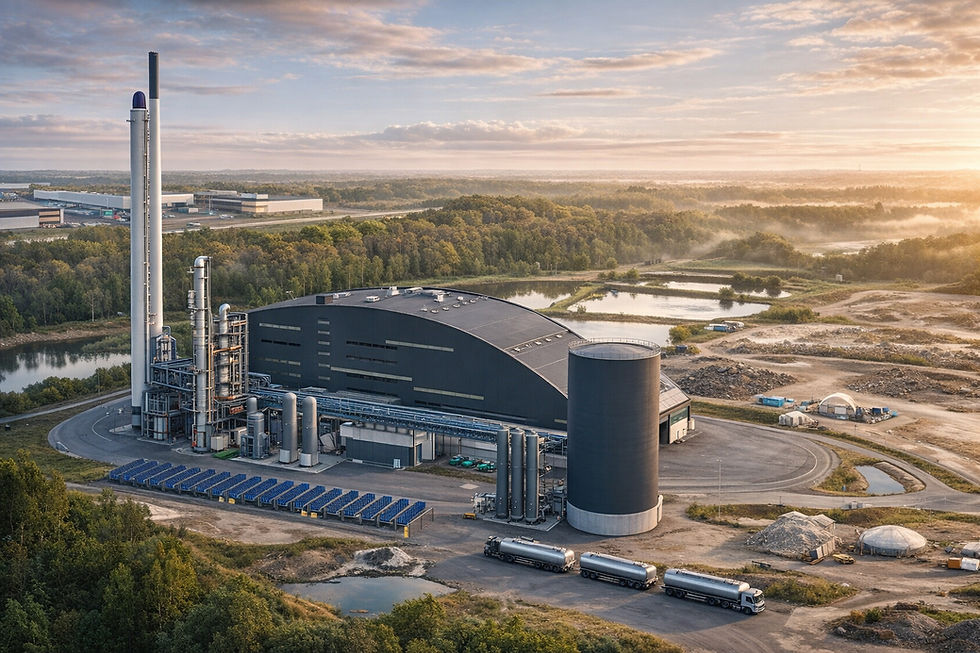
The project centres on a $1.25bn high-performance computing (HPC) build with two distinct components. A federal research facility of about 240,000 square feet is planned for national security challenges and classified projects, while an academic research facility of roughly 50,000 square feet would host unclassified work involving faculty, students and external collaborators.
That structure matters because it sets out a model where cutting-edge computing capability is paired with two modes of research: secure programmes that require controlled environments, and open applied science and engineering that can draw on broader participation. The source material does not specify a construction timeline, procurement approach, or how access to systems would be allocated between teams.
Why the partnership could be significant for research
Michigan SPARC’s importance, as described in the source, lies in what large-scale computing makes possible: running more detailed simulations, more frequently, and with fewer compromises. High-fidelity modelling can reduce reliance on slow, expensive, or impractical physical testing, and can help researchers explore scenarios that are difficult to recreate safely or repeatedly in the real world.
The project also stresses “accelerated research and collaboration” through people, not just hardware. LANL physicists Daniel Israel and Joshua Dolence have relocated to Michigan and taken joint appointments, signalling an intent to embed expertise across institutions rather than treating collaboration as occasional or remote. Dolence’s work on high-performance portable codes, including the Parthenon framework, and Israel’s focus on turbulence modelling and fluid dynamics, point to an emphasis on turning advanced computing into tools that can be reused across problems, not one-off demonstrations.
Potential public value in health, resilience and clean energy
The source frames the widest public impact around simulation-driven advances in health, resilient infrastructure, and clean energy. In oncology, it says the computing power will be used to model cell growth and optimise brain cancer treatments, enabling simulations previously considered too complex. In infrastructure, it highlights real-time modelling of how seismic waves interact with materials and foundations, which could inform the design of earthquake-resistant buildings.
On energy and climate, the project is described as supporting research into nuclear fusion and climate modelling to accelerate the energy transition. Taken together, these aims suggest a practical research agenda where high-fidelity simulations help bridge the gap between theory and deployment, aligning in a limited but meaningful way with the sustainable development goals through work tied to health outcomes and resilient systems.
What happens next and what questions remain locally
The facility is planned for construction in Ypsilanti Township, and has prompted debate over resource consumption, including water supply and electricity costs, as well as concerns about transparency after officials said the project’s scale increased following initial tax incentive approvals. The source does not set out what mitigations are planned, how energy and water demand would be managed, or what governance and reporting arrangements would apply over time.
Economically, the project is expected to generate up to 200 high-skilled jobs, with average salaries cited at $150,000 to $200,000. Beyond that headline, the more consequential question for communities may be whether the project can demonstrate clear scientific and societal benefits while addressing local constraints and trust, particularly where infrastructure demands are likely to be visible.