
Decidim, the living code of democracy

Published on 9 June 2026 at 08:32 GMT
By Editorial Till Heumann
Barcelona's open-source platform Decidim is helping to transform democratic participation from a stagnant bureaucratic obstacle into a dynamic, cooperative interface. Scaling to numerous global cities, this digital nucleus empowers citizens to actively weigh in on their urban ecosystems.
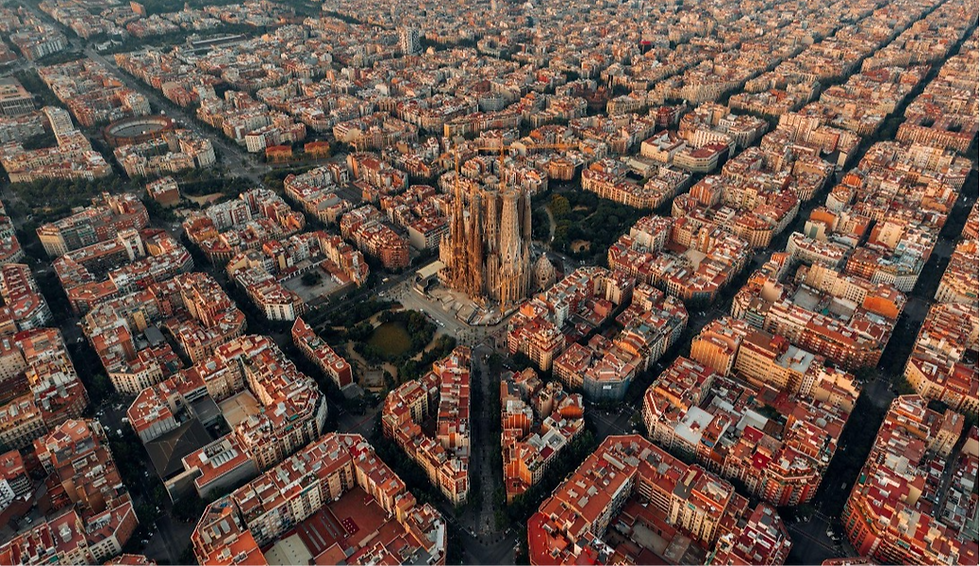
In Barcelona, for example, residents utilised Decidim to collaboratively shape the Superilles, or "superblocks," a bold redesign of city grids to prioritise green space and pedestrian access. Through the platform, neighbours proposed alternatives, gathered support, and refined plans, transforming decisions once reserved for city hall into a matter of collective authorship.
By offering an alternative to opaque administration through transparent civic engagement, Decidim aligns with UN Sustainable Development Goal 16—forging accountable, inclusive institutions. The platform’s global adoption wave proves that open software architecture is no longer merely a developer's tool. It is a foundational blueprint for a living, breathing digital democracy.
Sculpting the polis from digital clay
Crusted paper stacks in municipal basements clatter with stagnant bureaucracy. Heavy stamps strike thick documents. Black ink dries into fixed, unyielding decrees.
Now, observe the screen shining in a darkened living room in Gràcia. A finger glides across a smooth glass interface. A node lights up, pulsating calmly in a digital constellation. This is not a grievance form; it is a living civic membrane. A citizen plants a digital seed—a proposal for a shaded micro-park—and watches as the community waters it with iterative feedback.
The metabolic shift of governance
The concrete bunkers of twentieth-century administration were cast in rigid moulds. They cracked under the pressure of rapid demographic shifts and climatic stress. You can hear the structural fatigue in the sharp, staccato rhetoric of partisan gridlock. The old system dictates; it does not converse.
It operates on a delayed pace. A single urban proposal must survive a gauntlet of opaque committees. These ideas gather dust in subterranean municipal archives, calcifying before they can bloom. The relationship between the metropolis and the inhabitant was historically fractured, defined by a hard, unyielding friction.
Decidim introduces a wholly new structural approach. By treating civic engagement as a flowing, continuous dialogue, the platform helps weave a resilient societal fabric. Dialogue is facilitated through highly modular tools: citizens create proposals, engage in threaded discussions, and contribute amendments within open forums. Every step remains traceable, allowing community members to vote on ideas, witness how proposals evolve, and receive updates as projects adapt in real time. It conceptually re-engineers the municipal framework into an open-source mycelial network. The vision is a city that is no longer a static grid imposed from above, but a malleable terrain formed by its residents' collective intellect.

A grammar of the commons
We are witnessing the ambition of liquid governance. The goal is an administrative architecture that responds with the grace and immediacy of a breathing organism. Consider the interface itself as a masterclass in the grammar of the commons. We are moving away from the exclusionary, spiked vocabulary of traditional administration toward an inviting, soft digital landscape.
The system's architecture invites a more empathetic approach to urban planning. It aims to make the highly complex mechanics of municipal decision-making more accessible. Crucially, the platform embraces profound digital inclusion strategies. By adhering to global usability standards and offering multilingual interfaces, it supports navigation for users of differing abilities. Furthermore, neighbourhood outreach and offline participation options extend this access, ensuring that those with limited digital connectivity remain a vital part of the civic dialogue.
By striving to lower this cognitive barrier, the digital ecosystem can unlock a massive, previously dormant reservoir of civic intelligence. It encourages passive consumers of municipal services to become active, daily architects of their immediate environment. The friction of political polarisation can dissolve into the fluid momentum of collaborative design.
The intrinsic joy of shared agency
Historically, civic duty was framed as a sterile chore. It was a temporary tax paid in drab assembly halls. But what if shaping your city carried an intrinsic joy? This is the core of the new civic sphere: a principle where participating in democracy feels like a vital gain in personal freedom.
Decidim establishes a frictionless, almost game-like space for urban discourse. When a neighbourhood debates the pedestrianisation of a dense avenue, the platform does not map this debate as a confused, splintered shout. A luminous, branching tree of selected data emerges. You are not fighting city hall; you are playing a cooperative multiplayer game.
The ultimate prize is not a high score, but the vision of a breathing, vibrating street outside your own window. The reward loops traditionally hijacked by consumer tech are here rewired for joint growth. A user proposes a new cycling artery, and this geographical coordinate instantly becomes a synapse firing through the network. Architects can append feasibility notes, while urban planners inject topographical data.
We are not merely digitising bureaucracy; we are writing the genetic code for a civic organism that breathes in rhythm with its inhabitants.
The material ecology of open administration
In the digital domain, open-source code functions conceptually like living biological matter. Proprietary algorithms are closed loops. They are dead ends of corporate silos that breed mistrust and opacity. Conversely, an open architecture behaves like a flourishing ecological biome.
The open-source philosophy encourages continuous adaptation and evolution. When a modular feature is developed by a global community, the framework allows it to be shared and integrated across borders. The software grows a powerful immune system against corruption, sustained by absolute, radiant transparency. This immune response extends to the citizen: the platform operates with robust security and privacy safeguards, requiring explicit consent and adopting rigorous protocols to ensure participation is shielded from misuse.
Viewed through the lens of material ecology, this participatory architecture resembles a metabolic process for continuous urban renewal, propelled by human insight. Just as a forest redistributes nutrients through an underground fungal network, this digital platform channels political agency to where it is most urgently required. The data it processes is not cold computation; it represents the captured warmth of human desire.

Terraforming the physical street
To deeply grasp this digital alchemy, one must envision the physical spaces that such platforms strive to shape. Consider the ambition behind modern urban concepts like Barcelona’s Superilles. When citizens are empowered with digital tools to voice their desire for reimagined traffic flows, the foundation for physical transformation is laid.
The ultimate ambition of this digital interface is to help terraform the physical street. The shared goal is to see harsh tarmac reclaimed by porous, cooling earth and expansive canopies of green foliage. In this vision, the acoustic landscape is no longer dominated by the aggressive roar of motors, but is defined by the gentle hum of bicycle tyres and the melodic nuances of human conversation. Digital platforms serve as a vital sensory organ, gathering the collective intelligence needed to help cities move towards this greener, more breathable reality.
The architecture of invitation
We are bearing witness to a movement that translates bits into bricks, and upvotes into oxygen. The digital platform does not replace the physical city. It functions as the vital sensory network that enables the city to heal itself. Good design in the civic space is not simply an inconvenience avoided; it is a pronounced invitation.
By treating the civic interface with rigorous aesthetic standards, we signal a major shift. We tell the citizen that their voice is the most precious material in the construction of our society. The city is thinking out loud, allowing proposals to swell, inhale, and mature toward physical form.
A globally scalable democracy
The ambition of platforms like Decidim is not confined to the warm Mediterranean coast. The open-source system is scaling rapidly across the globe, from the busy wards of Kakogawa, Japan, to the sprawling boroughs of New York City. In Barcelona alone, over 40,000 residents have participated in decision-making activities, giving life to more than 1,500 proposals and actively influencing policies such as city budget allocations and public space redesigns.
Globally, cities implementing this framework report increased citizen engagement rates, higher transparency indices, and concrete policy shifts resulting from open consultations. Here, the ideals of UN Sustainable Development Goal 16 materialise in tangible initiatives. We are forging accountable, inclusive institutions that are dynamic and alive.
The open-source framework assures that democratic innovation can be freely shared, accelerating a global transition toward peaceful, participatory societies. By viewing democracy not as a finished, decaying monument, but as an endless, beautifully cooperative multiplayer experience, we are actively designing a civilisation that is deeply resilient, genuinely human, and boundlessly bright.
Deep dive & sources
● The civic nucleus: Decidim Open-Source Platform – decidim.org
● Global scaling & deployment: Decidim Global Ecosystem & Active Instances decidim.org/usedby/
● Institutional validation: Digital Public Goods Alliance (DPGA) Registry digitalpublicgoods.net
● Global architecture: UN Sustainable Development Goal 16 – sdgs.un.org/goals/goal16
● Urban data & transparency: Barcelona City Council Open Data


