
World Bicycle Relief turns rural mobility into essential infrastructure

Published on 5 August 2026 at 04:35 GMT
By Editorial Team SDG9
In many rural communities, distance is not merely a matter of geography. It can determine whether a pupil reaches school regularly, whether a health worker visits enough households, or whether a farmer can take produce to market before it loses value. World Bicycle Relief addresses this gap through purpose-built bicycles, local repair systems and community-based distribution programmes designed for places where public transport is limited and walking consumes hours of productive time.
The organisation describes the underlying problem as mobility poverty, a lack of affordable and reliable transport that restricts access to essential services and economic opportunity. The issue is especially visible beyond paved road networks, where households may be separated from schools, clinics, water points and trading centres by long distances and difficult terrain. In such settings, a bicycle can function less as a leisure object than as a practical piece of rural infrastructure.
World Bicycle Relief was founded in 2005 by F.K. Day and Leah Missbach Day after the Indian Ocean tsunami. Its first large programme, carried out with aid organisations in Sri Lanka, distributed more than 24,000 bicycles to people affected by the disaster. The organisation has since developed a nonprofit social-enterprise model that combines bicycle provision with local assembly, spare-parts supply, trained mechanics and long-term programme support.
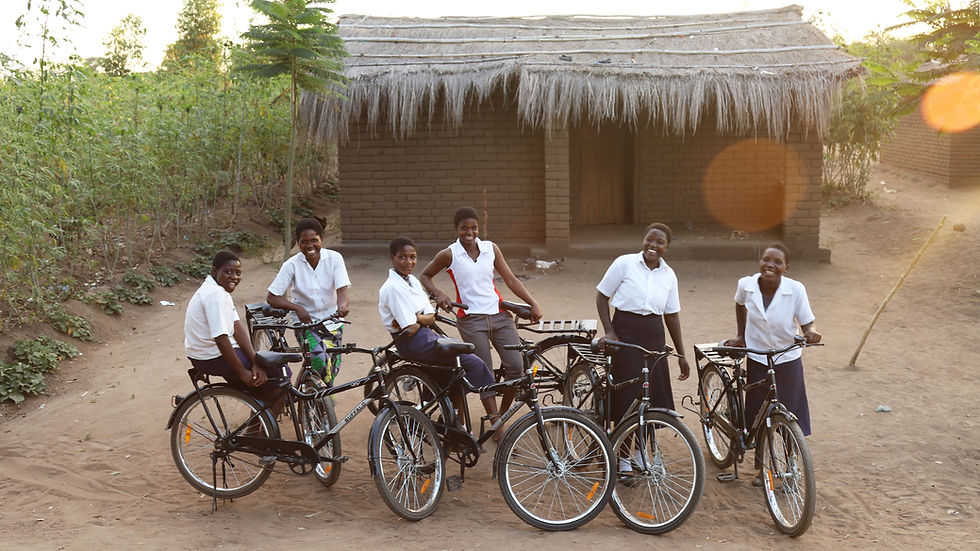
Central to this approach is the Buffalo Bicycle, a robust model developed for heavy loads, rough roads and frequent use. Its practical value depends on more than the frame itself. A bicycle that cannot be repaired locally can quickly become unusable, so the organisation seeks to build a wider bicycle ecosystem around each programme. This includes mechanics, replacement parts, supervisory committees and service arrangements intended to keep bicycles operating after the initial distribution.
The distinction matters because transport interventions often fail when equipment is delivered without maintenance capacity or local ownership. World Bicycle Relief works with governments, non-governmental organisations and communities to assess mobility needs and determine who will use bicycles, for what purpose and under which management structure. Its Mobilized Communities programmes currently operate in locations in Colombia, Kenya, Malawi, Zambia and Zimbabwe, according to the organisation.
Recent research has strengthened the evidence base for this model. An evaluation conducted by IDinsight with World Bicycle Relief followed 1,488 participants in 19 rural communities in Zambia. The randomised controlled trial compared adults who received bicycles with those who did not, with surveys conducted before distribution and at one- and two-year intervals.
The first-year findings reported that recipient households used their bicycles on an average of 223 days and travelled close to 20 kilometres per day. Compared with households without bicycles, they reported higher income, improved access to services and an average reduction of 4.2 hours in weekly travel time. World Bicycle Relief reported a 43 per cent difference in average monthly household income between recipient and comparison groups after the first year. These results were recorded during Zambia's severe 2024 drought, which made household resilience a significant part of the analysis.
Second-year findings, collected in 2025, indicated that several economic and social gains continued. The organisation reported that women in the study experienced a 54 per cent increase in average monthly income, while households reduced their reliance on motorised transport. As with any programme evaluation, the findings relate to the communities and conditions studied. They do not establish that every bicycle programme will produce identical results, but they provide unusually detailed evidence that last-mile mobility can affect income, service access and household resilience.
Education is another major area of intervention. Long journeys can contribute to lateness, absence and withdrawal from school, particularly where pupils must also complete domestic work. A bicycle can reduce travel time and physical fatigue, allowing pupils to arrive earlier and preserve more time for study. World Bicycle Relief gives particular attention to women and girls, who may face additional barriers linked to household responsibilities, safety and unequal access to transport.
The healthcare implications extend beyond patients travelling to clinics. Community health workers often cover dispersed settlements and depend on walking or unreliable transport. Bicycles can increase the number of households they reach and reduce the time between visits. This does not replace investment in clinics, staffing, medicines or safe roads, but it can strengthen the final connection between established services and people living beyond easy reach.
The broader policy case is supported by international transport and health institutions. The World Bank has repeatedly linked equitable transport access with participation in education, maternal health, employment and human development. The World Health Organization identifies cycling as a simple, affordable and comparatively clean form of transport, while stressing that its potential depends on road safety and supportive infrastructure.
For rural development, the strongest argument is therefore not that bicycles solve poverty independently. It is that affordable transport access can make other investments work better. A school has limited value to a child who cannot reach it consistently. A health programme is weakened when workers lose much of the day walking between villages. A market opportunity remains theoretical when producers cannot move goods efficiently.
This work connects most directly with SDG 9 (industry, innovation and infrastructure) because mobility is part of the infrastructure that links people to services and productive activity. The bicycle itself is a mature technology, but the innovation lies in adapting design, finance, maintenance and community management to rural conditions. The result is a form of human-scale transport that can complement roads and motorised services rather than compete with them.
Important limitations remain. Bicycles require safe routes, secure storage, repair networks and fair selection processes. They may be unsuitable for people with certain disabilities, for very long distances or for routes exposed to conflict, flooding or dangerous traffic. Gender norms can also restrict who is permitted to ride or control household assets. Effective programmes must therefore be based on local consultation and integrated with wider transport, education, health and economic policies.
World Bicycle Relief's experience shows how a relatively simple vehicle can become a strategic public-interest intervention when it is designed around actual users. Its programmes place the bicycle within a network of mechanics, institutions and community decisions. In places where a few kilometres can separate opportunity from exclusion, reliable rural mobility can determine whether existing services are genuinely accessible.
Further information:
• World Bicycle Relief, Official information on the organisation's mission, history, programme model and rural bicycle mobility work.
• World Bicycle Relief and IDinsight impact evaluation, Official summary of the two-year randomised controlled trial conducted in rural Zambia.
• World Health Organization, World Bicycle Day, Background on cycling as an affordable and sustainable transport mode and its links to health and development.
• World Bank, transport and accessibility, Institutional context on how equitable transport access supports education, healthcare and economic participation.


