The world changes when society chooses to change it - part two


Published on 18 August 2026 at 03:36 GMT
By Editorial Team SDG17
There is one phrase that captures the defining characteristic of the twenty-first century: the world is changing. It is changing faster than at almost any other period in modern history. Technologies are evolving, economies are being reshaped, societies are becoming increasingly interconnected and citizens are demanding greater accountability from institutions, businesses and governments alike.
Yet these transformations do not happen by chance. Behind many of the most meaningful changes are millions of people working quietly within local communities, charities, universities, businesses, public institutions and non-governmental organisations. Others act entirely on their own, driven simply by the belief that positive change is possible.
Humanity has never possessed so much scientific knowledge, technological capability and economic capacity to address global challenges. At the same time, many of those challenges continue to outpace collective action.
The United Nations acknowledges that progress towards the Sustainable Development Goals (SDGs) is falling behind the pace required to achieve the ambitions of the 2030 Agenda. Its global assessments conclude that while progress continues in many areas, numerous targets remain off track, with several having suffered setbacks following the COVID-19 pandemic, armed conflicts, rising living costs and the growing impacts of climate change.
Rather than representing failure, these findings serve as a reminder that the work is far from complete.
The world’s greatest challenges remain unresolved
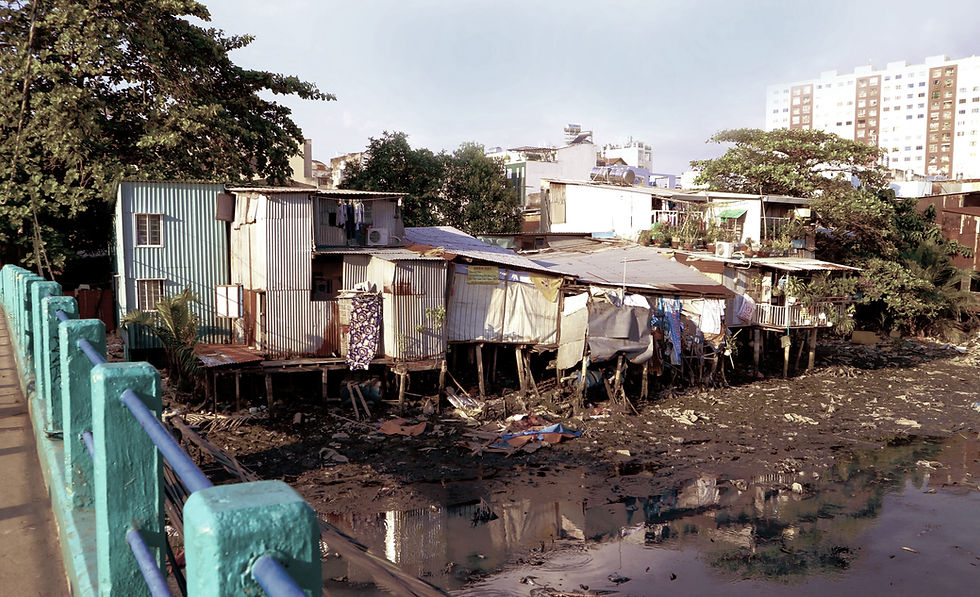
Extreme poverty has declined dramatically over recent decades, representing one of the greatest development achievements in history. Nevertheless, the World Bank estimates that more than 800 million people still live in extreme poverty, demonstrating both the scale of progress already achieved and the distance that remains.
Education tells a similar story. School enrolment has expanded worldwide, yet UNESCO continues to report that hundreds of millions of children and young people still fail to achieve minimum levels of learning, limiting future opportunities and economic development.
Environmental challenges are equally pressing. The Intergovernmental Panel on Climate Change (IPCC) continues to conclude that greenhouse gas emissions must decline more rapidly if the most severe consequences of global warming are to be avoided. Meanwhile, the Intergovernmental Science-Policy Platform on Biodiversity and Ecosystem Services (IPBES) has warned that biodiversity is declining at an unprecedented rate across many regions of the world.
Gender equality, access to safe drinking water, resilient healthcare systems, healthy oceans, sustainable cities and responsible consumption all remain central priorities for the decades ahead.
None of these challenges can be solved by governments alone.

Civil society as a catalyst for progress
This is precisely where civil society demonstrates its greatest value.
While governments establish public policy and businesses develop technologies and economic solutions, non-governmental organisations frequently operate where urgent needs first emerge. They often identify problems before they become widely recognised, connect scientific knowledge with local communities and help public institutions design more effective responses.
Far from competing with governments, experience increasingly shows that the most successful solutions arise when public institutions, businesses, universities and civil society organisations work together towards shared objectives.
This collaborative model may become one of the defining characteristics of sustainable development during the coming decades.
Social media has transformed public engagement
Only two decades ago, raising awareness of a social or environmental issue depended largely on traditional media.
Today, a single individual can launch an international campaign, recruit volunteers, raise financial support and reach millions of people through digital platforms.
Social media has fundamentally democratised communication, allowing small organisations to achieve levels of visibility that were once reserved for institutions with substantial financial resources.
These platforms also present genuine challenges. Misinformation, online polarisation and the rapid spread of false narratives have become significant concerns. The solution, however, is not to communicate less, but to communicate more responsibly by promoting evidence-based information, transparency and constructive dialogue.
When used ethically, digital platforms enable knowledge to spread faster than ever before and allow communities separated by thousands of kilometres to collaborate around shared causes.
Artificial intelligence can multiply social impact
Another defining transformation of this decade is the rapid development of artificial intelligence.
Public debate often focuses on its risks, many of which are legitimate and require appropriate governance, transparency and ethical safeguards. Yet concentrating exclusively on those risks overlooks one of the greatest opportunities available to civil society.
Artificial intelligence is already helping researchers monitor deforestation through satellite imagery, improve disaster response, optimise vaccination campaigns, translate educational and medical information into multiple languages, identify threatened species and analyse enormous scientific datasets within minutes rather than weeks.
For many smaller organisations, these technologies represent a remarkable opportunity. Tasks that previously demanded specialist teams and significant financial resources—including translation, research, report writing, statistical analysis, fundraising support, administrative management and educational content production—can now be carried out far more efficiently.
Technology will never replace human compassion, commitment or judgement. It can, however, dramatically increase the capacity of people working to improve the lives of others.
Giving visibility to those creating solutions
There is another way of contributing to positive change that is often overlooked: making successful initiatives visible.
Across the world, thousands of projects generate meaningful social and environmental impact but remain largely unknown beyond their immediate communities. Sharing these experiences enables others to learn from them, adapt proven approaches and replicate successful solutions in different contexts.
This is one of the most valuable roles that responsible journalism can play.

Within that context, Global Society News (GSN) aims to serve as an international platform dedicated to highlighting the work of non-governmental organisations, researchers, universities, public institutions, social entrepreneurs and engaged citizens who contribute to the achievement of the Sustainable Development Goals.
Reporting these stories is about far more than publishing positive news. It is about connecting knowledge, encouraging international cooperation and demonstrating that practical solutions already exist to many of the world’s most pressing challenges.
Every successful initiative has the potential to inspire another.
The future is written by those willing to act
History demonstrates that no generation has solved every problem it inherited. Each has faced challenges that appeared overwhelming while leaving behind solutions that once seemed impossible.
Today’s generation is no different. The challenges are immense, but humanity also possesses unprecedented scientific knowledge, technological capability and opportunities for international cooperation.
That is why saying the world is changing is more than a simple observation. It is a recognition that change can be directed towards a future that is more sustainable, more equitable and more resilient if governments, businesses, universities, media organisations and civil society choose to work together.
Non-governmental organisations will undoubtedly remain central to that journey. Equally important, however, will be every individual who chooses to contribute time, knowledge, creativity or resources to improving the lives of others.
Perhaps this is the greatest lesson offered by the history of civil society: meaningful change has never belonged exclusively to governments or major institutions. It begins when someone refuses to accept that a problem is unsolvable, inspires others to act and proves that collective action can reshape the future.
Because societies change when people choose to change them.
And once again, the world is changing.
Sources:
United Nations — The Sustainable Development Goals Report 2024
World Bank — Poverty, Prosperity, and Planet Report 2024
UNESCO — 2024/5 Global Education Monitoring Report: Monitoring SDG 4
Intergovernmental Panel on Climate Change (IPCC) — Climate Change 2023: AR6 Synthesis Report