
Cities that exclude the poor show how inequality is built into urban life

Published on 23 June 2026 at 05:58 GMT
By Editorial Team SDG11
Cities are often presented as engines of opportunity, but for many lower-income residents they are also places where inequality becomes physical. The cost of a home, the distance to a clinic, the price of a bus fare, the absence of shade, the quality of a school and the safety of a street can decide whether urban life expands people’s choices or quietly narrows them. This is the central challenge behind SDG 11, which calls for sustainable cities and communities that are inclusive, safe, resilient and sustainable.
Urban exclusion rarely arrives as a single decision. It is more often produced by zoning rules, land markets, infrastructure choices, policing practices, school boundaries, environmental neglect and private development incentives that work together over time. A city can appear modern and prosperous while making daily life harder for those who clean its offices, deliver its food, care for its children and staff its hospitals.
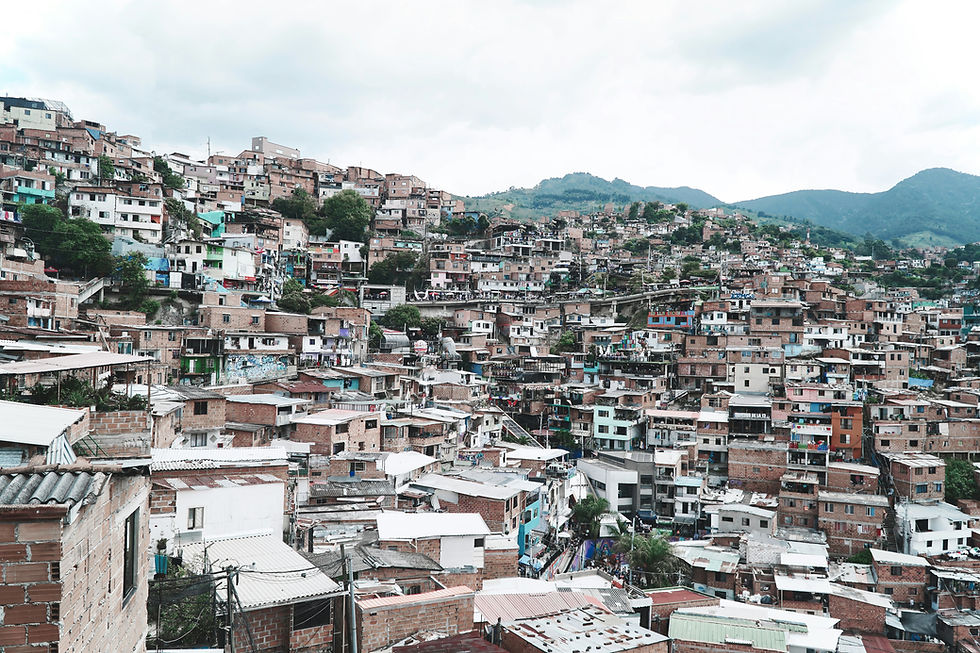
The issue is not only poverty in cities. It is poverty shaped by cities. When affordable housing is pushed far from employment centres, residents pay with time, money and health. When public transport is unreliable or costly, jobs become inaccessible. When pavements, lighting and safe crossings are absent, older people, children and disabled residents lose independence. When green space is concentrated in wealthier districts, heat, air pollution and poor mental health fall more heavily on poorer neighbourhoods.
This is why spatial inequality matters. It makes social inequality visible in maps. One district may have tree-lined streets, fast transit, good schools and nearby health services. Another may have overcrowded housing, long commutes, flood risk, few parks and limited public facilities. The divide is not accidental. It reflects choices about who is planned for, who is consulted and whose presence is treated as temporary, inconvenient or less valuable.
UN-Habitat has repeatedly argued that urbanisation can either deepen inequality or become a tool for shared prosperity. Its work on housing, basic services and urban governance places the question of inclusion at the centre of sustainable development. In practical terms, an inclusive city is not defined by skyline projects or investment rankings, but by whether ordinary residents can live securely, move affordably, access public services and participate in decisions that affect their neighbourhoods.
The housing crisis is the most visible front line. In many cities, rising rents and land values have outpaced wages, particularly for workers in informal, care, service and low-paid sectors. Regeneration can bring new infrastructure, but it can also displace existing communities when protections are weak. The language of renewal may hide the loss of social networks, local shops, cultural spaces and affordable rental homes.
The OECD has warned that unaffordable urban housing can worsen economic and spatial inequality, reduce quality of life and weaken social cohesion. This is not only a problem for people below the poverty line. Middle-income households are also being squeezed in many urban markets, while the poorest residents face the sharpest risks, including eviction, overcrowding and homelessness.
Transport is another form of inclusion or exclusion. A city may have jobs, schools and hospitals, but they are not truly accessible if reaching them requires multiple transfers, unsafe walking routes or a large share of household income. The World Bank has described urban transport as vital for connecting people to jobs, education, healthcare and essential services. For poorer residents, mobility is often the difference between opportunity and isolation.
The design of transport systems can also reveal whose time is valued. Routes that prioritise commuters travelling into business districts may neglect women making multi-stop journeys for care work, children travelling to school, elderly residents reaching clinics or informal workers moving outside standard peak hours. An inclusive transport system must therefore be measured not only by speed, but by affordability, coverage, safety and reliability.
Green space is equally political. Parks, trees, riversides and public squares are often treated as amenities, but they are also part of public health infrastructure. In hotter cities, tree cover can reduce exposure to dangerous heat. Public parks can support exercise, social connection and children’s development. Yet low-income areas are frequently more likely to lack safe, well-maintained open space, especially where land is under pressure for commercial development.
Climate change is making these inequalities more severe. Poorer neighbourhoods are often more exposed to flooding, heat stress and pollution, while having fewer resources to adapt. This connects SDG 11 with SDG 3 (good health and well-being), SDG 10 (reduced inequalities) and SDG 13 (climate action). The connection is not abstract. It can be seen in whether homes are safe during extreme weather, whether streets remain walkable in heatwaves and whether emergency services reach marginalised districts.
The phrase right to the city captures a wider democratic claim: that urban residents should not merely occupy space, but have a meaningful say in how it is shaped. Civil society organisations have used this idea to challenge evictions, exclusionary redevelopment, hostile public space and the treatment of informal settlements as problems to be removed rather than communities requiring services, security and recognition.
Slum Dwellers International has shown how organised communities can map settlements, document needs and negotiate with authorities for upgrading rather than displacement. This matters because official planning often excludes residents who lack formal tenure, even when they have lived and worked in a city for decades. Community-led data can make invisible neighbourhoods visible to decision-makers.
C40 Cities has also placed equity within urban climate action, recognising that sustainable planning must reduce emissions while protecting vulnerable communities. Low-carbon cities will not be socially sustainable if climate policies increase housing costs, displace informal workers or concentrate benefits in wealthy areas. The green transition must therefore be judged by who gains access to cleaner air, safer streets, better homes and lower energy costs.
The central tension is that cities need investment, but investment without safeguards can deepen exclusion. New rail stations can raise land values and price out nearby renters. Waterfront redevelopment can improve public space while removing informal livelihoods. Digital services can increase efficiency while excluding residents without internet access or documentation. Planning for inclusion means anticipating these effects before harm occurs.
There are practical tools available. Cities can expand social and non-profit housing, protect tenants, support community land trusts, require affordable units in new developments and regulate short-term rental pressures where they reduce housing supply. They can improve bus networks, pedestrian safety and cycling infrastructure in underserved areas, not only in central districts. They can prioritise schools, clinics, childcare, libraries and parks in neighbourhoods that have historically received less investment.
Inclusive design also requires participation that is more than consultation after decisions have already been made. Residents need accessible information, translation where necessary, meeting times that suit working people and mechanisms that give community input real influence. Without this, participation risks becoming a procedural exercise that legitimises plans already shaped by more powerful interests.
The question of dignity is often overlooked. Exclusion is not only material. It is also felt in the message a city sends to its residents. A broken pavement, a distant bus stop, a neglected playground or a lack of toilets in public space can tell people that they are not expected to belong. Conversely, well-designed public spaces, accessible services and secure housing can communicate recognition.
Cities will continue to grow, and the stakes are high. If urban development is guided mainly by land value and private consumption, cities may become more divided, less resilient and less democratic. If planning is treated as a public-interest tool, urbanisation can support better health, reduced inequality and stronger communities.
The challenge for inclusive urban design is therefore not cosmetic. It is about power, budgets, land and rights. A city that includes the poor is not one that simply leaves space for them at the margins. It is one that plans from the reality that lower-income residents are central to urban life, and that a sustainable city must be liveable for those with the least choice.
Further information:
* UN-Habitat, its research and policy work is central to understanding urban inequality, housing, planning and SDG 11. https://unhabitat.org/
* World Bank, its urban development and transport work explains how mobility connects residents to jobs, education, healthcare and essential services. https://www.worldbank.org/en/topic/urbandevelopment
* OECD, its urban housing analysis is relevant to affordability, social cohesion and the way housing markets shape inequality in cities. https://www.oecd.org/en/topics/urban-housing.html
* Slum Dwellers International, this civil society network works with urban poor communities on settlement mapping, advocacy and upgrading. https://sdinet.org/
* C40 Cities, this city network is relevant because climate action in urban areas increasingly includes equity, housing, transport and public health. https://www.c40.org/


