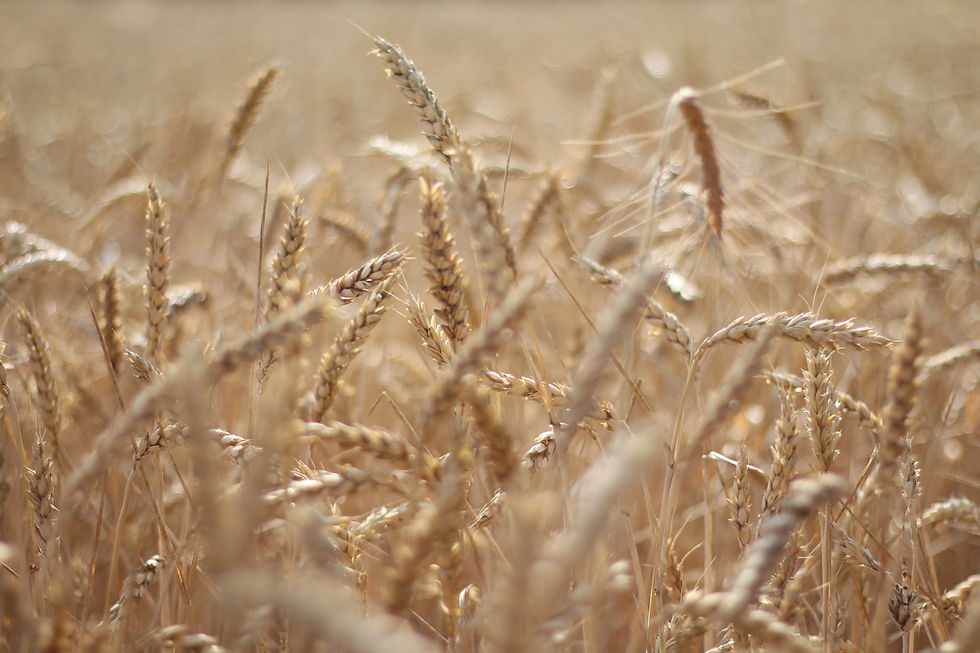
Regenerative agriculture can deliver results, but not every claim survives scrutiny


Published on 5 September 2026 at 01:48 GMT
By Editorial Team SDG2
Regenerative agriculture has moved rapidly from farm meetings into corporate sustainability strategies and food marketing. Its practical core is familiar: rotate crops, disturb soil less, keep living roots or residues on fields, integrate trees and manage livestock movement. The harder question is whether those methods rebuild soil health in ways that can be measured, while allowing farmers to remain financially viable during the transition.
There is no universally accepted definition or single performance standard for regenerative agriculture. That makes the label less informative than the underlying management and results. An assessment can instead ask what changed against a baseline: soil organic carbon at a stated depth, erosion, water infiltration, nutrient losses, yields, input use, labour, revenue and net returns. Claims based only on adopting a named practice can conceal weak implementation or benefits that have not been demonstrated.
Soil health measurements also require patience. Soil carbon varies across a field and changes slowly, while rainfall, texture, sampling depth and laboratory methods affect reported results. Improved surface cover or infiltration may appear before a statistically detectable rise in carbon stocks. A short trial can therefore miss a genuine long-term effect, but a single favourable soil test cannot establish that a whole farm is regenerating.
Different practices, different evidence
Crop rotation has one of the clearer agronomic cases, particularly when legumes or disease-breaking crops replace continuous monoculture. Rotations can interrupt pest cycles, spread workloads and add biological nitrogen. A 2025 global meta-analysis of 3,663 paired field-trial observations found that rotations increased total sequence yields, nutrients and revenue relative to continuous monoculture. The average result does not guarantee the same return on every farm: local markets, storage, equipment and the value of the added crop determine whether a biologically useful rotation is commercially workable.
Reduced tillage can limit erosion and cut fuel, labour and machinery passes. Its effects on soil carbon and yields are more conditional. A major global meta-analysis found that no-till alone was associated with a yield penalty on average, while outcomes improved when it was combined with residue retention and crop rotation, especially in rainfed dry climates. Carbon measured near the surface may also reflect redistribution within the soil profile rather than an equivalent increase through the full depth.
Cover crops protect bare soil, take up residual nutrients and supply roots between cash crops. They can reduce erosion and nitrate loss, and legume covers can contribute nitrogen. Yet establishment, seed and termination cost money, and poorly timed termination can compete for water or delay planting. The US Department of Agriculture Economic Research Service reported in 2025 that short-term returns to cover-crop adoption are often negative, with outcomes varying by region, crop system, soil and management. Grazing or harvesting the cover, high fertiliser prices and public cost-sharing can improve the calculation.
Agroforestry adds trees or shrubs to crop or livestock systems. Global syntheses associate it with higher biodiversity, soil carbon and other regulating services, often without an overall reduction in production. Those averages combine very different systems, from shelterbelts to alley cropping and silvopasture. Trees require establishment capital and may take years to produce timber, fruit, fodder or shade benefits. They can also compete with crops for light and water if species and spacing are poorly matched. The long delay between cost and return makes land tenure and access to patient finance central to adoption.
Managed grazing attempts to control stocking density, timing and recovery rather than allowing repeated use of the same plants. It can improve ground cover and pasture utilisation where previous grazing was poorly managed. Claims that rotational or adaptive grazing consistently stores large quantities of carbon are much less secure. A 2026 systematic review found that 47 of 70 studies failed multiple quality criteria; the 10 studies meeting all inclusion criteria showed no detectable change in soil organic carbon. This does not show that grazing management has no value, but it does weaken broad climate claims that are detached from local stocking rates, vegetation, rainfall and credible comparison sites.
The farm-level financial test
The transition question is not whether a practice eventually produces a benefit, but whether cash flow survives until that benefit arrives. New seed, fencing, water points, specialist machinery, advice and extra management can raise costs immediately. Yield reductions, learning errors and loss of a familiar market can arrive in the same season. Soil improvements, avoided erosion and greater drought tolerance may take longer to appear and may not generate a direct payment.
The 2025 US Department of Agriculture review found mixed economic results and emphasised that profitability changes over time. Conservation tillage often reduces operating costs, whereas cover crops usually add short-term expenses. Some benefits accrue beyond the farm through cleaner water, reduced sediment and carbon storage, while the farmer bears much of the transition risk. Cost-share programmes, technical assistance, transition insurance and long contracts can redistribute that risk, although their value depends on payment levels, administrative burden and whether practices fit the farm.
Adoption without losses exceeding a farm’s risk tolerance is possible in some circumstances, but not through a universal package. Lower-risk sequencing can begin with changes that use existing machinery or solve a known problem, followed by trials on limited acreage and measurement against comparable fields. Mixed crop-livestock farms may capture a second return by grazing covers. Farms with secure tenure and diverse markets may be better placed to wait for tree crops. Tenant farmers and highly indebted businesses can face a very different threshold for acceptable risk.
Marketing claims become testable when they specify outcomes, baselines, boundaries and time. A statement that a product comes from a farm using cover crops describes an activity. A claim that the system increased soil carbon or farmer income requires repeated measurement, an appropriate comparison and disclosure of uncertainty. Farm-level gains do not automatically translate into product-level climate claims, because fertiliser manufacture, livestock methane, energy use, land-use change and supply-chain emissions may alter the balance.
The evidence supports a measured conclusion. Crop diversification, year-round soil cover, carefully designed reduced tillage and context-specific agroforestry can improve important soil and ecosystem indicators. The scale and speed of change are variable, yield gains are not assured, and high-quality evidence for large grazing-driven carbon increases remains limited. Regenerative agriculture can be assessed as a set of hypotheses tested through transparent outcomes, rather than as a guarantee attached to a label.
This issue connects to SDG 2 (zero hunger) because farm productivity, soil condition and financial resilience influence the durability of food production. This connection does not remove the trade-offs. Programmes and claims can be assessed against both their environmental results and whether participating farmers can absorb the transition.
Written by a human author, edited with AI assistance.
Further information:
Nature Communications, Crop rotations synergize yield, nutrition, and revenue: a meta-analysis, supporting the figures on paired field trials and sequence-level yield, nutrient and revenue outcomes.
US Department of Agriculture Economic Research Service, Economic Outcomes of Soil Health and Conservation Practices on U.S. Cropland, supporting the analysis of adoption costs, yields, profitability and transition timing.
Nature, Productivity limits and potentials of the principles of conservation agriculture, supporting the context-dependent yield effects of no-till, residue retention and crop rotation.
Global Change Biology, Enhancement of Agroecosystem Multifunctionality by Agroforestry, supporting the assessment of agroforestry effects on biodiversity, ecosystem services and production.
Communications Earth & Environment, Systematic review reveals soil organic carbon benefits of alternative grazing depend on study quality, supporting the assessment of evidence quality and soil-carbon claims for alternative grazing.